ACH payment volume since 2014 has grown from 18.3 billion to 31.45 billion in 2023. On the other hand, the electronic check is being used more and more, but what are the differences between electronic checks vs ACH payments? Read on to find out what Echecks and ACH payments are, the main differences between the two, which one your business should use, and the answers to some frequently asked questions…
Trustpair secures ACH payments to vendors by continuously auditing supplier data and controlling payments before execution. Request a demo to learn more!
Echecks are electronic versions of paper checks. They are usually one-off payments that use the Automated Clearing House (ACH) to go from a checking account to the recipient’s bank account.
They do process a lot faster than paper checks though. This is because of the manual processing that is involved with an in-person check.
Hey there, folks! If you’re running a biz or just trying to keep your personal finances in check, you know paying bills on time ain’t just a chore—it’s a gotta-do. But with so many ways to send money these days, how do you pick the right one? Should you stick with good ol’ paper checks, go high-speed with wire transfers, or jump on the ACH bill pay train? At our lil’ corner of the internet, we’re all about making your money moves smoother, so I’m gonna break this down for ya. Let’s dive into ACH bill pay and see how it stacks up against other methods, so you can figure out what’s best for your wallet and your sanity.
What the Heck is ACH Bill Pay, Anyway?
Alright, let’s start with the star of the show: ACH. It stands for Automated Clearing House, which sounds fancy, but it’s really just a network that moves money electronically between banks in the U.S. Think of it as a digital middleman that gets your cash from point A to point B without you having to write a check or hand over wads of bills.
When we talk about ACH bill pay, we mean using this network to pay your invoices, utilities, or whatever else you owe. You’ve probably already used it without knowing—ever had a paycheck directly deposited into your account? Or set up auto-payments for your phone bill? That’s ACH in action, baby. It usually takes 2-5 business days to process, though some banks are speeding things up with same-day options now.
So, why’s it popular for bill pay? Here’s the lowdown
- Cheap as Chips: Most ACH transfers cost peanuts—sometimes just $0.25 to $0.75 per transaction, or even free at some banks. Compare that to other methods, and it’s a steal.
- Safe and Sound: Since it runs through a regulated network, there’s extra security. Plus, if something goes wrong, you might be able to reverse the payment.
- Set It and Forget It: ACH is perfect for recurring bills. Set up auto-payments, and you won’t miss a due date again.
- No Paper Mess: It’s all digital, so you’re saving trees and avoiding the hassle of mailing checks.
But it ain’t all sunshine. The main downside? It’s not instant. If you’re in a rush to pay a vendor who’s breathing down your neck, ACH might not cut it. That’s where other options come in, but we’ll get to that in a sec.
Why ACH Bill Pay Might Be Your New Best Friend
I’ve been helping small biz owners streamline their payments for years, and lemme tell ya, ACH is often a game-changer. Whether you’re paying suppliers, utilities, or even your team, here’s why it’s worth a look:
- Saves Time Like Crazy: Imagine not having to sign checks or run to the post office. With ACH, you can schedule payments online or through your bank app. Heck, some platforms even automate the whole approval process for ya.
- Improves Cash Flow: Since payments are electronic, they’re reflected in your account right away. No waiting for checks to clear or worrying about mail delays.
- Keeps Vendors Happy: Your suppliers get paid faster than with paper checks, and they don’t have to deal with high credit card fees either. Win-win!
- Cuts Costs: I’ve seen businesses save a ton by switching to ACH. No more postage, no more check printing, and those low transaction fees? They add up to big savings over time.
Now, I ain’t saying it’s perfect for everyone. If you’re dealing with international vendors, ACH can be trickier, though international options (called IAT) do exist. And like I mentioned, the speed ain’t always there. But for most day-to-day bill pay needs, it’s hard to beat.
ACH Bill Pay vs. Other Payment Methods: The Showdown
Alrighty, let’s put ACH up against some of its competitors and see who comes out on top. We’re gonna compare it to wire transfers, eChecks (which are kinda related), and even traditional paper checks. I’ll break this down so you can pick what works for your situation
ACH vs. Wire Transfers: Speed or Savings?
Wire transfers are like the sports car of payments—fast and flashy but they’ll cost ya. Unlike ACH which goes through a network and takes a few days, wire transfers move money directly between banks, often within hours or the same day if you beat the cutoff time.
Here’s a quick comparison table to show the diff:
| Feature | ACH Bill Pay | Wire Transfer |
|---|---|---|
| Speed | 2-5 business days (sometimes same-day) | Same day or within hours |
| Cost | $0.25-$0.75 or free | $20-$50 per transfer (varies) |
| Best For | Recurring bills, everyday payments | Urgent payments, large sums |
| Reversal Possible? | Sometimes, if caught early | Rarely, due to speed |
| Security | High (regulated network) | High, but scams more common |
So, when do you pick wire over ACH? Say you’re closing on a house and gotta send a big down payment pronto. Wire’s your guy. But for regular bill pay, like monthly rent or supplier invoices, ACH saves you cash and still gets the job done. I’ve had clients who swore by wires until they saw the fees piling up—most switched to ACH for anything that wasn’t a total emergency.
ACH vs. eChecks: Are They Even Different?
Now, this one’s a bit of a head-scratcher ‘cause eChecks are actually a type of ACH payment. Lemme explain. An eCheck is often just another name for an ACH debit, where the money is “pulled” from your account by the person you’re paying (with your permission, of course). Think of auto-payments for your gym membership or utilities—that’s typically an eCheck.
Key points to note:
- They’re Basically Cousins: Since eChecks use the ACH network, they’ve got the same benefits—low cost, secure, digital.
- Customer Convenience: For businesses, offering eChecks means clients can set up auto-payments, so you get paid on time every dang month.
- No Real Choice Here: You don’t gotta pick between ACH and eChecks—they’re part of the same family. It’s more about how the payment is initiated (push or pull).
I’ve worked with companies who use eChecks to pull subscription fees from customers, and it’s a breeze. No chasing down payments, no late fees—just smooth sailing. So, if you’re wondering “ACH or eCheck for bill pay,” know they’re pretty much tied together.
ACH vs. Traditional Paper Checks: Old School or No School?
C’mon now, are you still writing paper checks? I get it, some folks like the feel of pen on paper, but let’s be real—it’s slow, risky, and a pain in the neck. Let’s see how ACH compares:
- Speed: ACH takes days, but checks can take a week or more with mailing and processing. Forget about it!
- Cost: ACH is dirt cheap or free. Checks? You’re paying for printing, postage, and your time.
- Risk: Checks can get lost, stolen, or forged. ACH is digital and way safer.
- Ease: With ACH, pay from your couch. With checks, you’re hunting for stamps and envelopes.
I remember back when I used to mail checks for my biz—half the time they’d get delayed, and I’d be sweating bullets. Switching to ACH bill pay was like upgrading from a flip phone to a smartphone. Unless you’ve got a super old-school vendor who only takes checks, there’s no reason to stick with paper.
When Should You Use ACH Bill Pay?
Now that we’ve seen how ACH holds up, let’s talk about when it’s the right move for you. I’ve put together some scenarios to help ya decide:
- Recurring Payments: Got monthly bills like rent, utilities, or subscriptions? Set up ACH auto-payments and never worry about missing a due date.
- Small Business Operations: If you’re paying vendors or employees regularly, ACH saves time and money compared to wires or checks. Plus, platforms out there can automate the whole shebang.
- Budget-Friendly Needs: If keeping costs low is your jam, ACH’s low fees (or no fees) are a no-brainer.
- Domestic Transactions: ACH is mainly a U.S. thing, so it’s perfect for paying folks within the country. For international, you might need wires or other options.
But heads up—if you need to send money yesterday, like for an emergency payment, wire transfers are faster. And if fraud’s a big worry, know that while ACH is secure, you gotta double-check who you’re sending to, just like with any payment.
Real Talk: My Experience with ACH Bill Pay
Lemme share a quick story. A while back, I was helping a buddy who runs a small construction gig. He was drowning in paperwork, mailing checks to suppliers every week, and half the time they’d get lost or delayed. I told him, “Dude, switch to ACH bill pay already!” He was skeptical, thinking it’d be complicated, but once he set it up through his bank, it was smooth as butter. Payments went out on time, suppliers were happier, and he saved a bunch on postage. Plus, he could track everything online—no more guessing if a check cleared. That’s the kinda relief ACH brings to the table.
I’ve seen this play out with tons of folks. Whether you’re a solopreneur or managing a bigger outfit, getting your bill pay system dialed in with ACH can free up your headspace for stuff that actually matters, like growing your hustle.
Tips to Get Started with ACH Bill Pay
Ready to give ACH a spin? Here’s some practical advice from yours truly to make it easy:
- Check with Your Bank: Most banks offer ACH payments, often for free. Log into your online banking and look for “bill pay” or “ACH transfer” options.
- Use a Payment Platform: If you’re a business, consider tools that streamline ACH payments. They can automate approvals, store invoices, and even send reminders. Total lifesaver.
- Double-Check Details: Typos in account numbers can send money to the wrong place. Take a sec to verify before hitting “send.”
- Plan for Timing: Since ACH ain’t instant, schedule payments a few days early to avoid late fees.
- Talk to Vendors: Make sure they’re cool with ACH. Most are, but some might need a heads-up or a signed authorization form.
Oh, and don’t be shy to ask your bank for help if the setup feels wonky. They’ve usually got folks who can walk ya through it step by step.
Wrapping It Up: Is ACH Bill Pay the Winner for You?
So, where do we land after this deep dive? ACH bill pay is a freakin’ solid choice for most people and businesses looking to streamline payments. It’s cheap, secure, and cuts out the hassle of paper checks. Compared to wire transfers, it’s way more budget-friendly, though it lacks the speed for urgent stuff. And against eChecks? Well, they’re kinda the same thing, just a different flavor of ACH.
Here’s my take: if your bill pay needs are regular, domestic, and not on a crazy tight deadline, ACH is probably your best bet. It’s saved me and my clients countless headaches over the years, and I bet it can do the same for you. But if you’ve got special cases—like a big international payment or a last-minute emergency—consider mixing in wire transfers or other methods.
Wanna see how ACH bill pay fits into your life? Take a peek at your current payment setup. Are you wasting time or cash on old-school methods? If so, give ACH a test run. Hit up your bank or a payment platform and start small with one bill. Trust me, once you go digital with this, you ain’t gonna look back.
Got questions or wanna share how ACH worked for you? Drop a comment below—I’m all ears! Let’s keep this money convo going and get your bill pay game on point.
Echecks vs direct debit
If you were looking to compare Echecks vs direct debit, be mindful that the Echeck is a type of direct debit.
The difference is that a direct debit involves an organization taking funds from the customer’s bank account. It is an automated payment process that can be used for things like customers’ household bills. Whereas, an Echeck is created by the payer to the payee.
ACH payments, a definition
ACH (Automated Clearing House) payments are a digital way for a merchant to send and receive money. The payments online take place using the ACH Network.
They are electronic fund transfers that involve a bank account number and a routing number.
ACH payments to vendors can be secured by using software like Trustpair. The platform stops ACH fraud by auditing supplier data in real-time and controls payments before execution.
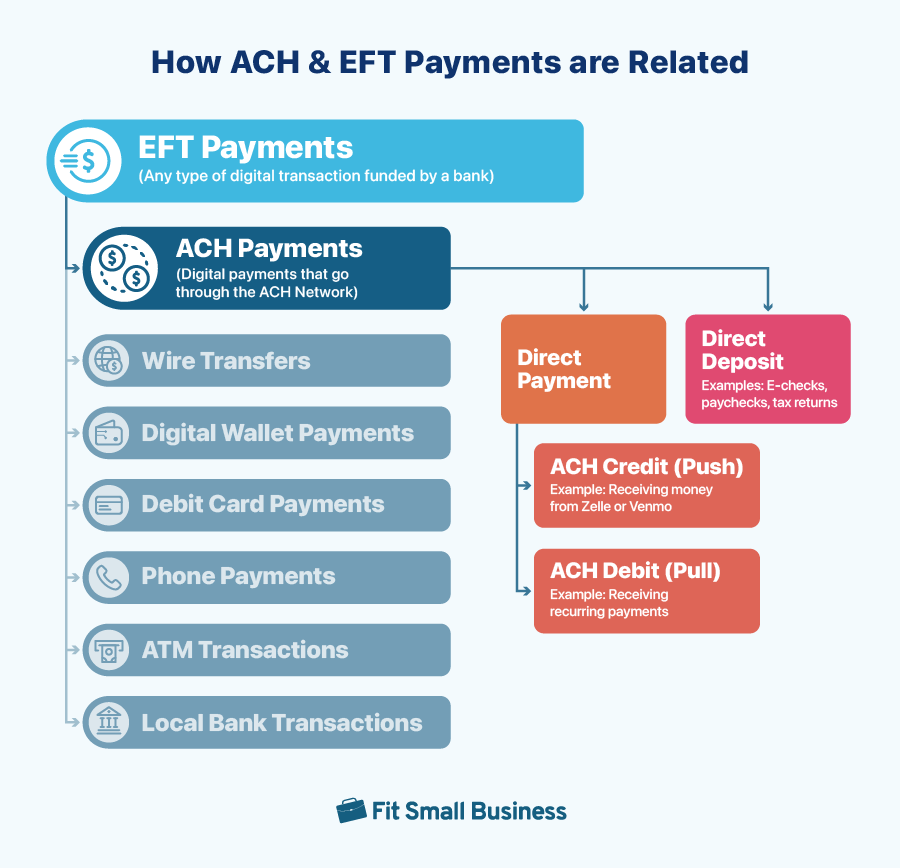
There are two main types of ACH payments:
- ACH debit transaction – takes funds from an account (a subscription payment that recurs)
- ACH credit transaction – sends funds from an account (pay salaries of staff)
ACH Transactions Explained | Direct Deposit, Bill Pay, P2P & More!
FAQ
What is the difference between ACH and bill pay?
Bill payments are usually listed as ACH debits, while payments to your account from another entity, like the US Government or IRS, are classified as ACH credits. The difference is that credits are pushed into an account while debits are pulled out of the account. Hopefully, that alleviates any confusion.
When to use ACH vs wire?
What are the two types of ACH payments?
Types of ACH payments
Within the Direct Payment category, there are two main types of ACH transfers, known as ACH Credit and ACH Debit. The main difference between the two is whether the money is ‘pushed’ or ‘pulled’ between accounts.
Is it better to pay via check or ACH?
Overall, ACH payments are a more efficient and effective system for businesses and the customers they serve. Lower processing fees help your business protect its revenue, and the safety and reliability ACH offers makes it attractive to customers who know that their payment information is secure.
