Are you thinking about investing in mutual funds? They’re often marketed as the best way for beginners to start investing, but there are some problems with them that financial advisors might not stress enough. I’ve been investing for years, so I’ve seen both the good and bad sides of mutual funds. Today, I want to talk about the bad things about mutual funds that you should think about before putting your money in them.
Understanding Mutual Funds: A Quick Refresher
Before we talk about the cons, let’s quickly go over what mutual funds are. Mutual funds buy a wide range of securities, such as stocks, bonds, and other assets, with money from many investors. Since they are professionally managed, it is up to the fund manager to choose which securities to buy or sell.
This structure gives everyday investors access to diversification and professional management without needing a huge amount of capital. Sounds great, right? Well, there’s more to the story.
The Major Disadvantages of Mutual Funds
1. High Fees That Eat Into Your Returns
One of the biggest disadvantages of mutual funds is the fees These can seriously erode your investment returns over time
Expense Ratios Most mutual funds charge annual expense ratios that typically range between 05% to 1.5% of your investment This might not sound like much, but over decades, it adds up to a significant amount.
Fund sales charges, or “loads,” can happen when you buy (front-end load) or sell (back-end load) shares. These can be as high as 5. 75% of your investment!.
12b-1 Fees: Many funds also charge marketing fees known as 12b-1 fees, which are used to pay for advertising and distribution costs. Yes, you’re literally paying for them to market the fund to other investors!
I remember investing in a fund with a 1.2% expense ratio thinking it wasn’t a big deal. Years later, I calculated that those fees had cost me thousands in potential returns. Be very wary of funds with expense ratios above 1.5% – they’re considered to be on the higher cost end.
2. Tax Inefficiency
Mutual funds are also bad because they don’t save you money on taxes, which can be a nasty surprise come tax time.
Uncontrollable Capital Gains Distributions: When a fund manager sells securities at a profit, the fund must distribute these capital gains to shareholders – even if you didn’t sell any shares yourself! This means you could face tax bills on gains you didn’t personally realize.
No Control Over Timing: You have no control over when these distributions occur. You might invest in December and immediately receive a capital gains distribution that you’ll owe taxes on, even though you just started investing.
Double Taxation: Dividends received by the fund are taxed at the investor level, creating a form of double taxation in some cases.
This tax inefficiency is particularly problematic if you hold mutual funds in taxable accounts rather than tax-advantaged accounts like IRAs or 401(k)s.
3. Poor Trade Execution
If you’re someone who values flexibility and quick execution of trades, mutual funds will frustrate you.
Once-Daily Pricing: Mutual funds are priced only once per day at the close of trading (the net asset value or NAV). If you place an order during the day, it won’t execute until after the market closes.
No Intraday Trading: You can’t buy or sell mutual fund shares during market hours. This means you can’t react quickly to market news or events.
No Limit Orders: You can’t place limit orders on mutual funds like you can with stocks or ETFs.
During the market crash of 2020, I wanted to buy more shares of a particular mutual fund when the market was down significantly midday. But I had to wait until the end of the day, by which time the market had partially recovered, resulting in a higher purchase price. This lack of control can be frustrating for active investors.
4. Management Risk and Potential Abuses
While professional management is often cited as a benefit, it also introduces risks:
Manager Risk: The performance of actively managed funds heavily depends on the skill and judgment of the fund manager. If the manager makes poor decisions or leaves the fund, your investment could suffer.
Potential Abuses: Some unethical practices can occur in mutual fund management, including:
- Churning: Excessive trading to generate commissions
- Window Dressing: Fund managers may buy top-performing stocks right before reporting periods to make it appear they held these winners all along
- Style Drift: Managers might deviate from the fund’s stated investment objective to chase performance
Back in 2019, I invested in a fund with a star manager who had great past performance. When that manager left for another firm, the fund’s performance dropped dramatically. I learned the hard way that relying too heavily on a specific manager is risky.
5. Lack of Control Over Investment Decisions
When you invest in a mutual fund, you’re essentially handing over control of investment decisions to someone else.
No Say in Security Selection: You have zero input on which specific stocks or bonds the fund buys or sells.
Limited Transparency: While funds disclose their holdings periodically, you typically don’t know what the fund owns in real-time.
Potentially Conflicting Values: The fund may invest in companies that don’t align with your values or preferences.
I once discovered that an environmental fund I’d invested in actually held positions in several oil companies due to a broad definition of “environmental impact.” This lack of control can lead to misalignment with your personal investment philosophy.
6. Cash Drag on Performance
Mutual funds typically maintain a cash position (often 5-10% of assets) to handle redemptions and have money available for new investments. This cash drag can hurt performance during rising markets.
In a year when the stock market returned 20%, a fund with a 5% cash position might only return 19% (before fees) simply because not all the money was invested in the market.
7. One-Size-Fits-All Approach
Mutual funds are designed for the masses, not tailored to your specific situation.
No Customization: Unlike individually managed accounts, mutual funds can’t be customized to your specific tax situation, risk tolerance, or investment goals.
Limited Flexibility: You can’t adjust the allocation within the fund – you’re stuck with what the manager decides.
This lack of personalization can result in investments that don’t perfectly match your needs or goals.
Comparison: Mutual Fund Disadvantages vs. Other Investment Options
To help you better understand how mutual funds stack up against alternatives, here’s a comparison table:
| Disadvantage | Mutual Funds | ETFs | Individual Stocks |
|---|---|---|---|
| Fees | Typically higher (0.5-1.5%) | Usually lower (0.03-0.5%) | One-time trading commission |
| Tax Efficiency | Poor – uncontrollable distributions | Better – fewer capital gains distributions | Best – complete control over tax events |
| Trade Execution | Once daily at market close | Real-time during market hours | Real-time during market hours |
| Control | Limited – professional manages | Limited – index follows rules | Complete control |
| Minimum Investment | Often $1,000+ | Price of one share | Price of one share |
| Transparency | Holdings disclosed quarterly | Holdings disclosed daily | Complete transparency |
Are Mutual Funds Right For You Despite These Disadvantages?
Despite these disadvantages, mutual funds aren’t all bad. They still offer benefits like:
- Diversification: Access to a broad portfolio in one investment
- Professional Management: Experts making investment decisions
- Convenience: Relatively hands-off investing option
- Automatic Reinvestment: Dividends can be automatically reinvested
The key is understanding whether the benefits outweigh the disadvantages for your specific situation. Here are some guidelines:
When Mutual Funds Might Still Make Sense
- You’re a beginner investor with limited knowledge about selecting individual securities
- You don’t have much time to research and manage investments
- You’re investing in a tax-advantaged account like an IRA or 401(k), reducing the tax inefficiency issue
- You can find low-cost index mutual funds with expense ratios under 0.2%
When You Should Probably Avoid Mutual Funds
- You’re a hands-on investor who wants control over individual investment decisions
- You’re investing in a taxable account and are concerned about tax efficiency
- You want to be able to trade throughout the day in response to market conditions
- You’re highly cost-conscious and sensitive to fees
How to Mitigate the Disadvantages of Mutual Funds
If you do decide to invest in mutual funds, here are some strategies to minimize their disadvantages:
- Focus on low-cost index funds with expense ratios under 0.2%
- Avoid load funds that charge sales fees
- Hold mutual funds in tax-advantaged accounts like IRAs and 401(k)s
- Consider ETFs as an alternative for taxable accounts
- Research fund managers and their track records before investing
- Regularly review fund performance and holdings to ensure alignment with your goals
The Bottom Line
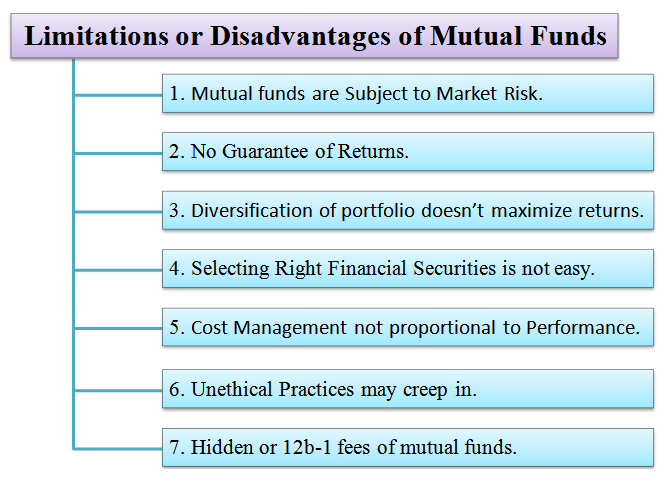
Mutual funds have significant disadvantages including high fees, tax inefficiency, poor trade execution, management risk, lack of control, cash drag, and a one-size-fits-all approach. While they offer benefits like diversification and professional management, it’s essential to understand these drawbacks before investing.
In my own portfolio, I’ve shifted away from high-cost actively managed mutual funds toward a mix of low-cost index funds (in tax-advantaged accounts) and ETFs (in taxable accounts). This approach helps me minimize fees and taxes while still getting the benefits of diversified, professionally managed investments.
The most important thing is to make an informed decision based on your specific financial situation, goals, and preferences. Don’t just buy mutual funds because they’re popular or recommended by a financial advisor – understand what you’re getting into, including all the potential disadvantages.
Have you had any negative experiences with mutual funds? Or maybe you’ve found ways to make them work well in your portfolio despite these disadvantages? I’d love to hear your thoughts and experiences!
Why Mutual Funds Over Index Funds?
FAQ
What is the main disadvantage of a mutual fund?
There are many good things about mutual funds, like smart portfolio management, reinvesting dividends, lowering risk, ease of use, and fair pricing. Disadvantages include high fees, tax inefficiency, poor trade execution, and the potential for management abuses.
What is the biggest problem with mutual funds?
High fees and expenses are the worst thing about mutual funds because they can really hurt your investment returns. These costs include management and advisory fees, administrative costs, marketing expenses, and potential sales charges or “loads”.
What if I invest $5000 in mutual funds for 5 years?
5 Years: Your investment can grow to approximately Rs. 4. 12 lakh. 10 Years: Over 10 years, the same SIP can grow to Rs. 11. 61 lakh.
What are the risks of mutual funds?
The main risks of mutual funds include market risk, interest rate risk, inflation risk, and credit risk, which can lead to a loss of your principal investment. Other risks include fees and expenses, which can reduce returns, and liquidity risk, where you might not be able to easily sell your shares. Investors may also be exposed to management risk and concentration risk if the fund is not well-diversified.
