With a Roth IRA, contributions are not tax-deductible, but earnings can grow tax-free, and qualified withdrawals are tax- and penalty-free. Roth IRA withdrawal and penalty rules vary depending on your age, how long youve had the account, and other factors.
So you’ve been diligently contributing to your Roth IRA for retirement, but now you’re dreaming about buying your first home. That down payment is looking pretty steep isn’t it? Trust me, I get it – saving for both retirement AND a home can feel like trying to fill two swimming pools with one garden hose.
Good news: you might be able to tap into your Roth IRA to help buy that first home without getting slapped with penalties! But before you rush to withdraw that cash, let’s dig into the details so you don’t accidentally create a financial mess.
The Roth IRA First-Time Homebuyer Rule Explained
The IRS actually built a special exception into the rules that allows first-time homebuyers to use their Roth IRA funds to help purchase a home. Here’s the basic rundown:
- You can withdraw your contributions from your Roth IRA at any time, tax and penalty-free (because you already paid taxes on this money)
- You can withdraw up to $10,000 in earnings penalty-free for a qualified first-time home purchase
- If your Roth IRA is at least 5 years old, these earnings withdrawals are also completely tax-free
But wait, there’s more fine print (because of course there is, it’s the IRS we’re talking about!)
What Counts as a “First-Time” Home Purchase?
Here’s where it gets interesting – you don’t actually have to be buying your very first home ever. According to the IRS you qualify as a “first-time homebuyer” if
- You (and your spouse, if married) haven’t owned a primary residence in the past 2 years
That’s right! Even if you owned homes previously, if you’ve been renting for the last two years, you qualify as a “first-time” buyer in the eyes of the IRS. Pretty sweet loophole, right?
What Can You Use the Money For?
The withdrawn funds must go toward “qualified acquisition costs” which include:
- Down payment
- Closing costs
- Construction costs
- Renovation expenses (if buying a fixer-upper)
Important Time Restrictions
One rule people often miss: You must use the funds within 120 days of withdrawal for your home purchase. If you don’t, those earnings might become subject to taxes and penalties after all.
Contributions vs. Earnings: Understanding the Difference
This is SUPER important, so pay attention!
When you take money out of your Roth IRA, the IRS considers that you’re withdrawing contributions first, then earnings. This matters a ton for tax purposes:
Roth IRA Contributions:
- Can be withdrawn anytime, for any reason with no taxes or penalties
- No limits on how much you can withdraw
- No first-time homebuyer requirement needed
- No 5-year waiting period required
Roth IRA Earnings:
- Limited to $10,000 lifetime maximum for the home purchase exception
- Must qualify as a first-time homebuyer
- Must have had your Roth IRA open for at least 5 years to avoid taxes
- Subject to income taxes if your account is less than 5 years old
So let’s say you’ve contributed $30,000 to your Roth IRA over the years, and now your account is worth $45,000 total. You could withdraw all $30,000 of your contributions with no penalties or taxes whatsoever. And then you could withdraw up to $10,000 of the remaining $15,000 in earnings under the first-time homebuyer exception.
When Using Your Roth IRA to Buy a Home Makes Sense
Let me be honest – just because you CAN use your Roth IRA for a home purchase doesn’t mean you SHOULD. But here are some situations where it might actually be a good idea:
-
You’ve been maxing out multiple retirement accounts – If you’ve been contributing heavily to both a 401(k) and a Roth IRA, you might be able to spare some Roth funds without derailing your retirement.
-
You’re in a high-rent area – If buying would significantly reduce your monthly housing costs compared to renting, the long-term financial benefits might outweigh the lost retirement growth.
-
You’ve “over-saved” in your Roth IRA – If you’re young (30-40) and have been diligent about retirement savings, using some Roth money could make sense while still leaving plenty to grow for retirement.
-
You have other significant retirement savings sources – If your employer offers a solid 401(k) match that you’ve been taking advantage of, your Roth IRA might be more expendable.
When You Should ABSOLUTELY AVOID Using Your Roth IRA
There are definitely times when raiding your Roth IRA is a terrible idea:
-
It’s your only retirement savings – If your Roth IRA represents your entire retirement nest egg, PLEASE don’t touch it for a home purchase!
-
You’re completely emptying the account – Taking everything out means starting retirement savings from scratch, which is financially devastating long-term.
-
You can’t afford the home otherwise – If you need Roth IRA money just to qualify for the mortgage, you’re probably buying too much house.
-
You’re over 40 with limited savings – The closer you get to retirement, the more valuable that tax-free growth becomes. The opportunity cost gets steeper with age.
Remember: when you withdraw money from your Roth IRA, you’re not just losing the amount you take out – you’re losing all the future tax-free growth on that money. A $10,000 withdrawal at age 30 could easily cost you $100,000+ in retirement wealth!
Smart Strategies If You Do Use Your Roth IRA
If you’ve weighed all the factors and decided that using your Roth IRA for a home purchase makes sense for your situation, here are some smart moves:
Strategy 1: Contributions First, Earnings Second
Always withdraw your contributions before touching any earnings. Since contributions can be withdrawn anytime penalty-free, save that $10,000 earnings exception for when you really need it.
Strategy 2: Partial Withdrawal Strategy
Don’t feel like you need to withdraw the full $10,000 in earnings just because you can. Calculate the minimum you actually need.
Strategy 3: The Married Couple Advantage
If you’re married and both have Roth IRAs, you BOTH qualify for the $10,000 exception ($20,000 total) if you’re both first-time homebuyers.
Strategy 4: Timing Matters
Make sure you’ve had your Roth IRA open for at least 5 years to avoid taxes on earnings withdrawals.
Alternatives to Consider Before Tapping Your Roth IRA
Before you raid your retirement savings, consider these alternatives:
- First-time homebuyer programs – FHA loans with 3.5% down payments, VA loans for military members, USDA rural development loans, or state/local programs
- Family gifts – Parents or family members can gift money toward your down payment
- Employer programs – Some companies offer homebuyer assistance or 401(k) loans that might be preferable
- Save more aggressively – Temporarily boost your savings rate or use windfalls (bonuses, tax refunds) for your down payment fund
- Buy less house – Consider a starter home that requires a smaller down payment
The Tax Implications
If you do withdraw from your Roth IRA for a home purchase, be aware of the tax implications:
- Contributions: Never taxed when withdrawn
- Earnings (qualified): No taxes or penalties if rules are followed and account is 5+ years old
- Earnings (non-qualified): No penalties under the first-time homebuyer exception, but you’ll pay income taxes if your account is less than 5 years old
- Form 8606: Required for documenting basis in Roth IRA for tax purposes
Real-World Example: The True Cost
Let me share an example to illustrate what this could really cost you:
Imagine a 30-year-old withdrawing $15,000 from their Roth IRA to buy a home. The immediate benefit is getting into homeownership and building equity.
But the long-term cost? Assuming 7% average annual growth, that $15,000 would have grown to approximately $225,000 by age 67 (retirement age).
That’s the true opportunity cost – not $15,000, but $225,000 in lost retirement wealth!
My Take: Is It Worth It?
As someone who’s looked at this from multiple angles, I think using your Roth IRA to buy a home should be a last resort, not your first option. The flexibility is there for situations where it truly makes sense – when you’ve been diligent about retirement savings but need help transitioning from renter to homeowner.
But don’t use it as a substitute for proper home purchase planning or as a way to buy more house than you can afford.
Remember: your Roth IRA is one of the most powerful wealth-building tools available. Every dollar you withdraw is a dollar that won’t grow tax-free for decades. Make sure the benefits of homeownership truly justify interrupting that growth.
Key Takeaways
- You can withdraw your Roth IRA contributions anytime, tax and penalty-free
- You can withdraw up to $10,000 in earnings penalty-free for a first-time home purchase
- If your Roth IRA is at least 5 years old, these earnings withdrawals are also tax-free
- “First-time homebuyer” means you haven’t owned a primary residence in the past 2 years
- You must use the funds within 120 days for qualified acquisition costs
- Consider all alternatives before tapping retirement funds
- Calculate the long-term opportunity cost of lost tax-free growth
Have you considered using your Roth IRA to buy a home? Or have you already done it? I’d love to hear about your experience in the comments below!
Disclaimer: While I’ve tried to provide accurate information, tax rules can be complicated. Always consult with a tax professional before making significant financial decisions involving your retirement accounts.
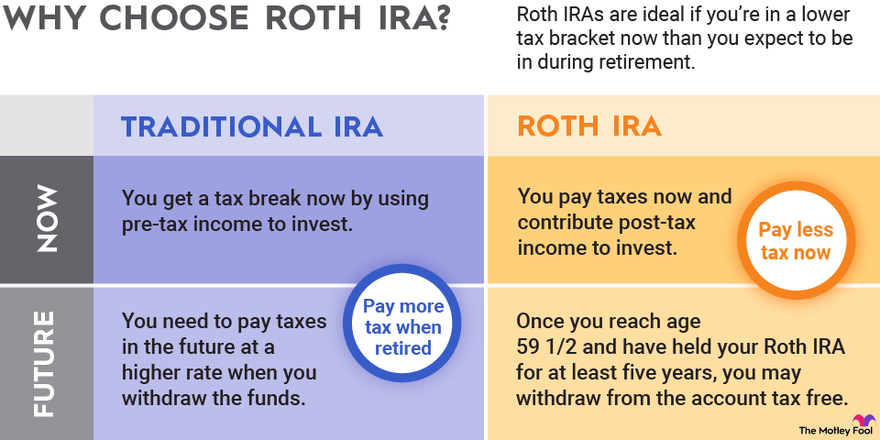
Roth IRA withdrawal guidelines
Before making a Roth IRA withdrawal, keep in mind the following rules to avoid a potential 10% early withdrawal penalty:
- Withdrawals must be taken after age 59½.
- Withdrawals must be taken after a five-year holding period.
- If you transfer your Traditional or Roth IRA at any age and request that the check be made payable to you, you have up to 60 days to deposit that check into another IRA without taxes or penalties. This is known as a “nontaxable rollover,” and you can do this once within a 12-month period.
Repayment of certain distributions
You may be able to pay all or a portion of certain distributions. Please consult with your tax advisor and learn more at IRS Publication 590-B.
Can You Use Your 401(k)/IRA to Buy a Home?… [Here’s What You Need to Know]
FAQ
Can a Roth IRA fund a first-time home purchase?
But with a Roth IRA, you may be able to avoid both taxes and penalties if you’ve had the account open for at least five years and use it to fund a first-time home purchase.
Can I use my IRA to buy a house?
Yes, you can use your individual retirement account (IRA) to buy a house, but there are rules and potential tax implications. For a first-time home purchase, both traditional and Roth IRAs allow you to withdraw up to $10,000 at any time or age—whether the money consists of earnings or contributions—without the usual 10% early withdrawal penalty.
Do you need a Roth IRA if you’re a first-time homebuyer?
To use your Roth IRA for a down payment on a first home, you and your spouse must meet the following requirements: you are first-time homebuyers (as defined by the IRS as someone who hasn’t owned a principal residence in the past two years), and your Roth IRA has been open for at least five years counting from January 1 of the year you made your first Roth IRA contribution.
What is the Roth IRA first-time home buyer rule?
The Roth IRA First-Time Home Buyer Rule lets you withdraw contributions anytime tax- and penalty-free, plus up to $10,000 in earnings tax-free if conditions are met. Using a Roth IRA for your down payment can save thousands in taxes compared to a taxable account, helping you reach home ownership faster.
How much money can a first-time homebuyer put in a Roth IRA?
First-time homebuyers who qualify and have Roth IRAs can put a total of $20,000 ($10,000 x 2) worth of earnings towards purchasing a home. This money can be withdrawn penalty-free to cover most costs associated with buying a home, including down payments and closing costs.
What is a Roth IRA first-time homebuyer exemption?
The Roth IRA first-time homebuyer exemption is a useful strategy if you’re having trouble saving up to buy a home. It can accelerate your ability to buy a home and take advantage of low mortgage interest rates. However, before pursuing this path, talk with a financial advisor or check out our list of the best investment apps.
Can you use Roth IRA to buy your first house?
How much can you withdraw from a Roth IRA for a first-time home purchase?
Can I use Roth IRA funds to buy a house without penalty?
For a first-time home purchase, both traditional and Roth IRAs allow you to withdraw up to $10,000 at any time or age—whether the money consists of earnings or contributions—without the usual 10% early withdrawal penalty. However, you may still owe taxes.
Can I withdraw from my Roth IRA without penalty?
