On face value the question of ‘what is the average’ is a simple one, the answer is £595 per week (£30,940 p.a.) for a retired couple and £282 per week (£14,664 p.a.) for a single retiree as per the most up to date Government Pensioners’ Income figures.
However, these figures do not take into account that everyone’s retirement looks different and so the question of ‘what is the average retirement income in the UK’ shouldn’t be boiled down to a static annual figure and should be looked upon through a more personal lens – by its nature, an average will not be the right amount for everyone.
Ever wondered if your pension savings are on track for a comfortable retirement? You’re not alone. According to a 2024 Which? survey, over half of future retirees aren’t confident about how much money they’ll need for a comfortable retirement. Let’s cut through the confusion and figure out what really constitutes a good monthly pension amount in the UK today.
The Quick Answer: How Much Pension Do You Need?
The simple answer is: it depends on your desired lifestyle. But let me give you some concrete figures to work with:
According to the Pensions and Lifetime Savings Association (PLSA), in 2025 you need:
- Comfortable retirement: £43,900 per year for a single person, £60,600 for a couple
- Moderate retirement: £31,700 per year for a single person, £43,900 for a couple
- Minimum retirement: £13,400 per year for a single person, £21,600 for a couple
These figures reflect the annual expenditure needed to achieve each standard of living in retirement, But what do these standards actually mean in real life? Let’s break it down
What Lifestyle Can You Expect at Each Pension Level?
I’ve put together a table showing what you can afford at each retirement level for a two-person household
| Category | Minimum (£21,600/year) | Moderate (£43,900/year) | Comfortable (£60,600/year) |
|---|---|---|---|
| Housing | £200/year for DIY maintenance | £500/year maintenance, £300 contingency | £600/year maintenance, £300 contingency |
| Food shopping | £109/week groceries | £103/week groceries | £134/week groceries |
| Eating out | £24/month on takeaways, limited dining out | £21/month on takeaways + £106/month to take others for meals | £32/week on takeaways + £105/month for dining out with others |
| Transport | No car, £30/month on taxis | 3-year-old small car replaced every 7 years, £22/month on taxis | 3-year-old small car replaced every 5 years, £22/month on taxis |
| Holidays | UK coach holidays or budget self-catering breaks | 2-week European holiday + UK weekend breaks | Fortnight 4-star Mediterranean holiday + three long UK weekend breaks |
| Clothing | £460/year on clothes | £750/year on clothes | £1,500/year on clothes |
As you can see there’s quite a difference between just getting by and living comfortably!
How Much Do People Actually Receive in Retirement?
Before we talk about what’s “good,” let’s look at what’s typical. According to recent UK government data from 2024, the average weekly income for single pensioners is £282, which works out at around £14,664 per year. For couples, the average weekly income is £595, or approximately £30,940 per year.
This average retirement income is affected by where you live in the UK. If you’re in London, you’re likely to have less than the average, while those in Scotland or the North East tend to have more to spend. The main difference comes down to housing and living costs.
Where Does Retirement Income Come From?
A good monthly pension typically comes from multiple sources:
-
State Pension – In 2025/26, the full new state pension is £230.25 per week (£11,973 per year), but not everyone gets the full amount.
-
Private Pensions – These come in two main types:
- Final Salary Pensions – These provide guaranteed income based on your salary and years of service
- Defined Contribution Pensions – The most common type now, where you and your employer contribute, and the final amount depends on how much you’ve saved and how your investments perform
-
Other Income Sources – Such as investments, property rental, or part-time work
In 2024, about 70% of pensioners received income from a private pension, with the proportion increasing in recent years.
How Much Do I Need to Save to Get a Good Monthly Pension?
So, how much do you need to save to reach these income levels? Let’s look at the numbers, assuming you’ll receive the full state pension (£11,973 per year):
To achieve a moderate retirement standard:
- Single person (£31,700/year): You need around £375,600 in your pot for drawdown or £312,600 for an annuity
- Couple (£43,900/year): You need around £381,800 in your pot for drawdown or £317,700 for an annuity
For a comfortable retirement standard:
- Single person (£43,900/year): You need around £609,270 in your pot for drawdown or £505,000 for an annuity
- Couple (£60,600/year): You need around £697,500 in your pot for drawdown or £578,000 for an annuity
These figures assume you’ll access your money through either pension drawdown (where you leave your pension invested and take income as needed) or by buying an annuity (which provides guaranteed income for life).
When Should I Start Saving for a Pension?
The honest truth? As soon as possible! The earlier you start, the better.
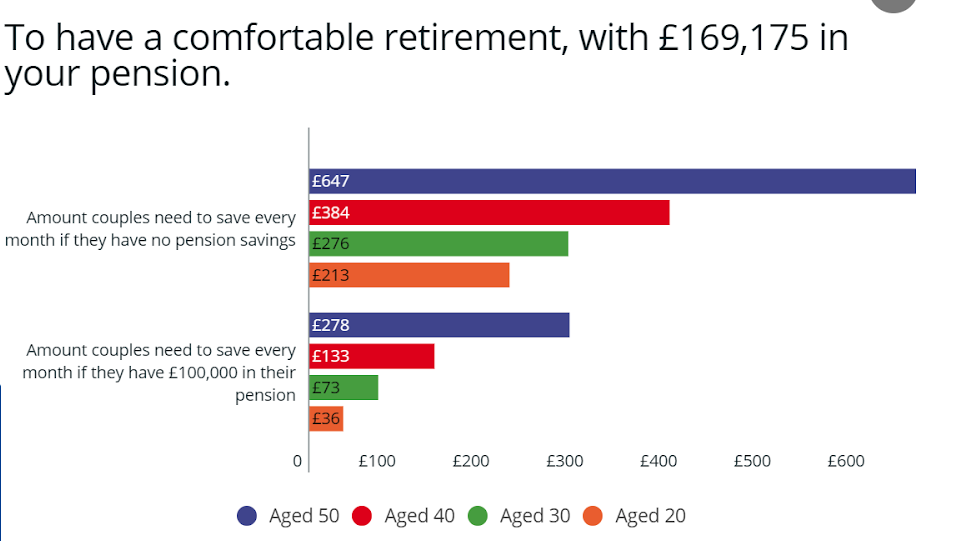
There’s a simple rule of thumb: Take the age you start paying into a pension, divide it by 2, and that’s the percentage of your salary you should aim to contribute each year.
For example:
- Start at age 24 → Aim to save 12% of your salary
- Start at age 34 → Aim to save 17% of your salary
- Start at age 40 → Aim to save 20% of your salary
Remember, these percentages include both your contributions, tax relief, and any employer contributions.
How Does the UK’s Pension System Work?
The UK pension system rests on a few key elements:
1. Auto-Enrollment
Under auto-enrollment rules, the minimum total contribution for a workplace pension scheme is 8% of your ‘qualifying earnings’:
- 5% from you (including tax relief)
- 3% from your employer
However, this minimum is unlikely to provide a comfortable retirement. I’d recommend exceeding this amount if possible.
2. Tax Relief
When you pay into a pension, you get tax relief at your income tax rate:
- Basic rate (20%): A £100 contribution costs you just £80
- Higher rate (40%): A £100 contribution costs you just £60
- Additional rate (45%): A £100 contribution costs you just £55
Higher and additional rate taxpayers need to claim the extra relief above 20% through their tax return or by contacting HMRC.
Am I Saving Enough? How to Tell
To determine if you’re on track, consider using one of these methods:
- The 70% Rule: Aim for 70% of your current salary as your retirement income
- The 10x Rule: Aim to build a pot that’s 10 times your annual salary
- Use a Pension Calculator: Tools like those offered by Aviva can help you see if your current savings rate will meet your target
What If I’m Not On Track?
If you’re worried you’re not saving enough, here are some steps you can take:
- Increase your contributions – Even small increases can make a big difference over time
- Check for old pension pots – You might have forgotten pensions from previous jobs
- Consider delaying retirement – Working a few years longer can significantly boost your pension
- Review your investment strategy – Make sure your pension is invested appropriately for your age and risk tolerance
- Get financial advice – A professional adviser can help you create a personalized plan
Regional Differences in Pension Needs
Your location in the UK can significantly impact how far your pension stretches. Londoners generally need more for the same lifestyle compared to those in the North or Scotland.
The Reality of UK Retirement in 2025
Research suggests a couple in the UK needs an annual combined income of £59,000 after tax to have a retirement with few or no money worries.
The good news? The PLSA says that 76% of people are on track to meet at least the Minimum retirement standard, including all couples on the full state pension. About one in five workers should reach the Moderate level, although only 8% are currently on track to achieve the Comfortable level.
So, what’s a “good” monthly pension amount in the UK? While the figures above give you benchmarks to aim for, what’s “good” ultimately depends on:
- Your desired lifestyle in retirement
- Where you plan to live
- Whether you’ll have paid off your mortgage
- Your health and care needs
- Whether you’re single or part of a couple
For many people, a pension income between £2,000-£3,000 per month would provide a moderate to comfortable retirement, but your personal needs might vary.
The key takeaway? Start saving early, save as much as you can afford, and regularly review your pension to ensure you’re on track for the retirement lifestyle you want.
What pension amount are you aiming for? Have you checked if you’re on track recently? Remember, it’s never too late to improve your retirement prospects!
Note: All figures in this article are based on 2025 data. Pension requirements and state pension amounts may change in future years, so it’s important to stay updated with the latest information.
What is the average retirement income for a single person?
As shown in the table above, the amount that needs to be saved for retirement depends on the lifestyle you want to achieve. For a single person, this varies from an income of £13,400 a year for a minimum retirement to £43,900 a year for a comfortable retirement. These figures are just estimates, intended to give you an idea of the kind of lifestyle you might expect with each level of retirement income.
What is the average income for a retired couple?
The figures for a retired couple start at £21,600 and rise to £60,600, according to the Retirement Living Standards tables, with £44,900 considered ‘moderate’.
Whether you are a couple or single, there are additional factors that can impact the level of income you may need. For instance, those with dependents may have further financial commitments and a different lifestyle to those with no dependents.
The Average UK Retirement Income – How Do You Compare?
FAQ
What is the average pension income in the UK?
The UK government’s most recent data for 2024 shows the average weekly income for single pensioners to be £282. This works out at around £14,664 per year. The average retirement income in the UK is also affected by regions. If you live in London, you’re likely to have less than the average retirement income.
How much retirement income should I receive from my private pension?
Find out how much retirement income you might receive from your private pension and how to boost it by using our pension calculator below. This is less than 66% of your current income. 66% is considered comfortable income level for retirement. Try adjusting the values below to reach the target. Want to boost your pension?
Should you get a monthly pension?
For others, it’s about being able to help their kids or pay for travel. There’s a classic rule tossed around in the retirement world: most experts suggest you should aim for a monthly pension —across all your retirement income sources—that covers 70%–80% of your pre-retirement income.
How much should I save for my pension?
All of these factors will determine how much you need to save for your pension but, as a general rule of thumb, you should aim for a retirement income of about two-thirds of your salary to maintain your current lifestyle in retirement.
What is the average pension contribution in the UK?
By law, typically, the average employee pension contribution in the UK is at least 5%. The UK’s average employer pension contribution percentage, also by law, is 3%. With some employer pension schemes, the employer matches your contributions or may even exceed them. What is a good monthly pension payout? What is a good monthly retirement income?
How much money do you need to get a pension UK?
This now requires an annual income of £43,100 for single people and £59,000 for couples. What is the average monthly pension contribution in the UK? By law, typically, the average employee pension contribution in the UK is at least 5%. The UK’s average employer pension contribution percentage, also by law, is 3%.
How much is a decent pension in the UK?
The 50 – 70 rule is a quick estimate of how much you could spend during your retirement. It suggests that you should aim for an annual income that is between 50% and 70% of your working income. In other words, if you are earning £100,000 then in retirement you will want to achieve somewhere between £50,000 and £70,000.
What is considered a good monthly pension?
What is the average pension payout per month?
How much should I put in my pension each month in the UK?
Many people work out how much they should be investing by halving their age. That gives you a rough idea of what percentage of your salary should go to your pension. For example if you’re 30, set things up so your pension contributions (including any money from your employer) equal 15% of your salary.
